

In Paris, winter weather events ranging from mild to severe can occur, with temperatures falling below 0°C. Weather conditions can vary greatly: light snowfall, successive snowfalls and accumulation of snow cover, freezing rain following snow showers, etc. In addition, temperatures are even lower at the top of the Eiffel Tower than at ground level: in fact, the temperature drops by 0.65 to 1°C per 100 meters (depending on the level of humidity in the air). While snow and ice melt on the ground in Paris when the temperature is 1 or 0°C, they last longer on the second floor of the Tower, for example, which is 115 meters above ground, and can even turn to black ice on the metal platforms and stairs.
Large amounts of snow or ice can also cause malfunctions in the Tower's equipment, such as the elevators.
In these conditions, the priority of the Eiffel Tower Operating Company (SETE) is above all to ensure the safety of visitors and its teams. Under these conditions (when the ground is covered with snow or ice), the decision may be taken to close the monument as a precaution.
Once the snow or ice has passed, the priority is then to completely restore the monument and make all surfaces passable and clear.
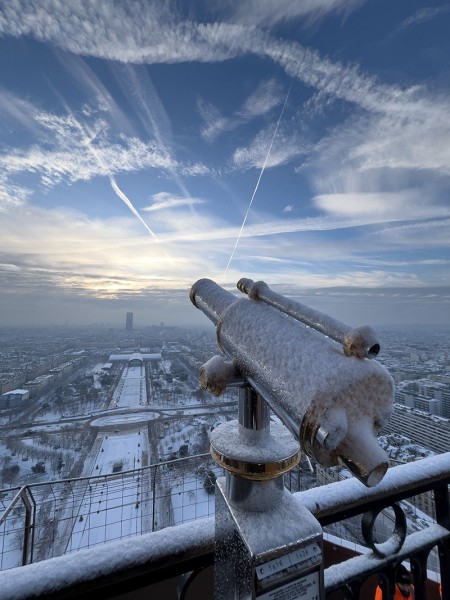
How can snow be removed from the monument ?
Therefore, the preferred techniques involve clearing the thickest layers of snow with shovels. In some cases where platforms are frozen, it may be necessary to heat them in order to accelerate the melting of residual ice.
In order to make the Tower accessible and safe for teams and visitors, this is a tedious and specialized task for a unique monument!


 The Eiffel Tower under the snow


